Office Removals in Kensington
If you are planning office removals in Kensington, you will already know that moving a workplace in this part of London is rarely straightforward. Kensington combines elegant period buildings, modern commercial spaces, busy streets, controlled parking, and a constant flow of visitors, residents, and business traffic. That mix creates a very specific set of challenges for any business that needs to relocate desks, IT equipment, storage, filing, stock, furniture, or specialist items safely and efficiently.
A successful office move is not just about lifting boxes into a van. It is about planning access, protecting business continuity, coordinating timing, handling delicate equipment, and making sure your team can get back to work quickly. Whether you are moving a small studio, a growing professional practice, a clinic office, a retail back office, or a larger corporate workspace, choosing a local team that understands Kensington can make the whole process smoother from start to finish.
Our office removal service is designed for real local customers who want a practical, organised, and reliable move. From pre-move planning to dismantling, transport, and placement at the new site, the aim is to reduce disruption and keep everything under control. If you need office removals Kensington businesses can depend on, this page explains what is included, how the service works, what affects pricing, and how to prepare your team.
Why Kensington Needs a Local Approach

Kensington is a distinctive area with its own movement and access challenges. Roads can be narrow or heavily used, parking may be restricted, and loading opportunities can be limited around many commercial and mixed-use buildings. Offices in and around High Street Kensington, Kensington Church Street, South Kensington, Gloucester Road, Earl’s Court, and the borders with Chelsea and Notting Hill often need careful scheduling to avoid delays.
Many local properties also have features that affect removals work, such as lift restrictions, shared entrances, concierge systems, basement offices, upper-floor workspaces, and buildings with strict time windows for deliveries and collections. A local removals team familiar with these conditions can plan around them rather than reacting to them on the day.
This matters because an office move is often tied to deadlines: a lease end date, fit-out completion, a staff return date, or a weekend relocation that must be completed before Monday morning. In a busy part of London, local knowledge can save time, reduce confusion, and help protect your schedule.
What Our Office Removals Service Covers

Office removals can involve much more than standard furniture transport. Most businesses need support with a combination of packing, dismantling, labelling, movement, and reassembly. A good service is flexible enough to handle everything from a compact workspace to a multi-room office with equipment that needs extra care.
Typical office removal work may include:
- Pre-move planning and site review
- Packing of office contents and supplies
- Furniture dismantling and reassembly
- Safe handling of desks, chairs, cabinets, and shelving
- Movement of filing, archives, and documentation
- Transport of computers, monitors, printers, and peripherals
- Careful relocation of fragile or high-value items
- Placement of items at the new office according to plan
Some businesses also ask for assistance with disposal of redundant furniture or coordination of staged moves, where teams relocate in phases. If your office is still operating during the move, planning becomes even more important, because the process must be organised around staff availability and minimal interruption to daily work.
Suitable for Residential and Commercial Business Setups
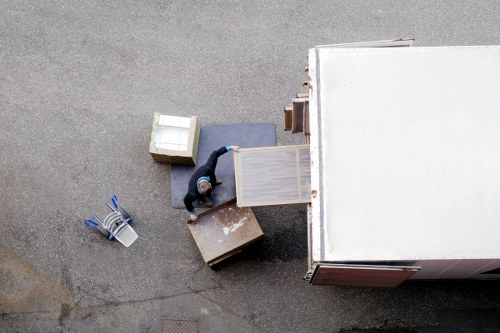
Kensington contains a wide mix of property types, and that means office removals need to be adaptable. We often support small professional practices, creative agencies, consultancies, medical or therapy offices, private tuition rooms, and home-based businesses operating from elegant apartments or mews properties. We also work with commercial clients who need structured move planning for a more formal office environment.
For businesses in converted townhouses, shared workspaces, and offices above ground-floor premises, access can be the main issue. Narrow stairways, lift size, and neighbour sensitivity all need consideration. In larger buildings, you may need to book service lifts, notify building management, or work within agreed time slots. These are the kinds of practical details a local team should be ready for.
Whether you are moving a few workstations or an entire office floor, the right approach is one that keeps your business assets protected and your operation moving. Office removals in Kensington should feel organised, not chaotic. That starts with a clear plan and a team that understands the area.
How the Service Usually Works
Every office move is different, but most follow a similar structure. The process should be simple to understand and designed around your business requirements. Good removals work reduces stress by keeping everyone informed and making sure there are no surprises on the day.
Here is how a typical office relocation is handled:
- Initial discussion – You explain the size of the move, the type of office, the locations involved, and any access concerns.
- Planning – A moving plan is created around timing, packing needs, vehicle access, and any building restrictions.
- Preparation – Items are packed, labelled, and prepared for transport. Furniture may be dismantled if required.
- Move day – The team arrives at the agreed time, loads items carefully, and transports them securely to the new premises.
- Delivery and placement – Items are unloaded and placed in the correct rooms or work zones according to the plan.
- Reassembly – Desks, tables, and other dismantled furniture are reassembled where needed.
If your business has a complex setup, a phased move may be more suitable. This can help you keep part of the office running while another section is moved. For example, you may want to relocate archived records first, then furniture, then IT equipment, and finally staff workstations. A flexible removals team can work to that sequence.
For many local clients, the best service is one that balances speed with caution. In offices, even small mistakes can create major delays. Careful labelling, secure loading, and orderly unloading all make a difference.
Preparing for an Office Move in Kensington

Preparation is one of the biggest factors in a smooth relocation. The more organised your office is before moving day, the faster the move can be completed and the lower the chance of misplaced items or downtime. Kensington offices often have a mix of equipment, documents, and furniture that need to be sorted by department, function, or priority.
A useful preparation checklist includes:
- Choosing a move date that works with your business schedule
- Informing staff about packing responsibilities and timing
- Backing up important digital files before equipment is moved
- Labelling boxes clearly by department, desk, or room
- Separating items that must be moved first from items that can wait
- Checking building access, lift bookings, and loading arrangements
- Measuring furniture and key access points if needed
- Removing personal belongings from desks and storage areas
It is also sensible to identify any items that need special handling in advance. This may include server equipment, artwork, confidential files, fragile display pieces, or heavy storage units. If there are items that should not be stacked or tilted, the removals team needs to know early so they can plan the load properly.
For offices with sensitive materials, a little extra organisation can help preserve privacy and minimise risk. Clear labelling, secure packing, and structured room-by-room movement can save a great deal of time when you arrive at the new premises.
Local Access, Parking, and Building Challenges

One of the reasons local businesses choose office removals Kensington specialists is the need to manage access carefully. Parking in central and west London can be limited, controlled, or subject to permit rules. On busy streets, unloading space may be limited to a narrow window, and the route from vehicle to entrance may involve steps, corridors, or shared hallways.
Some of the most common challenges include:
- Restricted or metered parking near the building
- Busy main roads and limited stopping opportunities
- Lift reservations or building management rules
- Stair access in period properties
- Limited loading bays or time-based access restrictions
- Need for protection in communal areas
Experienced removals teams will look at these issues before the move and adapt the approach accordingly. That may mean using smaller vehicles, staggering loading, coordinating arrival times precisely, or planning extra hands for stair carries and longer internal walks. The goal is to keep the move efficient without causing unnecessary disruption to neighbours, tenants, or building staff.
In Kensington, where many offices are located in heritage or mixed-use buildings, it is especially important to work with movers who can stay calm, organised, and respectful of the environment around them.
Why Choose a Local Kensington Office Removal Company
Choosing a local company is not simply about convenience. It is about practical understanding. A team that regularly works in Kensington is more likely to understand route planning, access conditions, typical building layouts, and the realities of moving in a busy part of London. That can lead to a better experience overall.
Here are some of the main advantages of using a local service:
- Better area knowledge – Local movers are familiar with Kensington streets, access points, and parking restrictions.
- More efficient planning – When the team understands local building types, they can plan realistically from the start.
- Faster response times – Local businesses may find it easier to arrange surveys, planning discussions, and move dates.
- Flexible support – If your move changes or develops in stages, a nearby team can often adapt more easily.
- Reduced disruption – Careful planning around neighbourhood conditions can help keep the move smooth.
For business owners and office managers, this local understanding can be valuable when time is tight. It is especially helpful for moves involving both residential-style office spaces and busy commercial premises, where different access requirements apply. A team that already understands the local environment can focus more on execution and less on discovery.
Contact us today to discuss your office move requirements and request a free quote tailored to your Kensington relocation.
What Affects Office Removal Costs
Many customers want an idea of what influences the cost of an office move, even if exact pricing depends on the details of the job. While it is not sensible to promise fixed rates without understanding the move, there are some common factors that usually shape the quotation.
Key pricing factors often include:
- The size of the office and number of items to move
- Whether packing materials and packing support are needed
- The amount of dismantling and reassembly required
- Distance between the old and new premises
- Access difficulties such as stairs, parking, or lift restrictions
- Whether the move needs to be completed outside normal working hours
- The presence of fragile, heavy, or specialist equipment
- Whether disposal or clearance work is also required
In many cases, a well-planned move can actually save money by reducing delays, avoiding damage, and limiting staff downtime. If a move is rushed or poorly coordinated, hidden costs can appear later through disruption, missed time, or the need to correct problems. That is why a realistic plan is always worth discussing at the start.
If you are comparing providers, it is sensible to ask how they handle access issues, what is included in the service, and whether they can work around your preferred timing. A transparent conversation at the beginning helps avoid misunderstandings later.
Handling Office Furniture, IT Equipment, and Files
Office relocations often include a wide mix of items, and each type needs a different level of care. Desks and meeting tables may need dismantling. Filing cabinets and archive boxes need orderly handling. IT equipment requires careful packing and transport to avoid damage. Display units, reception furniture, and branded items may need extra attention so they arrive ready for use.
Some items commonly included in office removals are:
- Office desks and workstations
- Task chairs and meeting chairs
- Storage units and shelving
- Lockable cabinets and filing systems
- Reception counters and waiting area furniture
- Monitors, printers, and computer accessories
- Boxed files, archive records, and stationery
- Kitchen or breakout area items
Businesses should be especially careful with confidential documents and electronic devices. Files should be organised in advance, and computer systems should be backed up before moving day. If there are servers, network hardware, or specialist workstations, these should be flagged early so that the right packing and handling methods can be used.
For some offices, the move is also an opportunity to streamline. Redundant furniture, out-of-date equipment, and unused storage can be separated before the move, making the new office easier to set up and more efficient from day one.
Minimising Downtime for Your Business
Most businesses in Kensington cannot afford a long interruption to work. Client appointments, internal meetings, calls, deliveries, and service schedules often continue around the move date. The best office removals service understands that the relocation is only part of the job; keeping your business functioning is just as important.
Ways to reduce downtime include:
- Moving outside office hours or during quieter periods where possible
- Using a phased move so part of the business remains operational
- Labelling everything clearly so setup is faster at the new site
- Preparing IT and communications in advance
- Assigning one internal contact to coordinate with the removals team
- Keeping essential items separate for immediate access
In some cases, the move can be planned over a weekend or late in the week so staff can return to a functional workspace with minimal interruption. Even a small amount of planning can make the first morning in the new office far more productive.
When a move is handled well, your team can settle in quickly rather than spending hours searching for items or rearranging rooms. That is a major benefit for companies that want to keep momentum during a relocation.
What to Ask Before You Book
If you are arranging office removals in Kensington, it helps to ask a few practical questions before confirming the service. These questions can reveal how well a provider understands your needs and whether they are prepared for the realities of a local office move.
You may want to ask:
- How will access and parking be handled at both addresses?
- Can the move be organised around our business hours?
- Do you offer help with dismantling and reassembly?
- Can you work with fragile or specialist items?
- What preparation should our staff complete before moving day?
- How are boxes, furniture, and equipment kept organised during the move?
- Can you assist with phased relocations or partial moves?
These questions are useful because they focus on the details that matter most in real life. A smooth office relocation depends on logistics, timing, and communication just as much as manpower.
Areas Covered Around Kensington
Kensington sits close to several busy and highly connected parts of west and central London, which makes it a common base for professional, medical, creative, and retail-related office space. A local removals service can usually support moves across nearby neighbourhoods as well as within Kensington itself.
Areas commonly covered include:
- South Kensington
- High Street Kensington
- Earl’s Court
- Gloucester Road
- Holland Park
- Notting Hill borders
- Chelsea borders
- West Kensington
That wider coverage is useful for businesses moving between nearby offices or relocating from Kensington to another part of London. It also helps when one site is a temporary workspace and the other is a longer-term office, studio, or practice location.
If your business is moving within the local area, a team that knows the neighbourhood can often plan routes and timings more realistically than a provider unfamiliar with the local road network.
Support for Different Types of Local Businesses
Office removals in this area are not limited to one type of company. Kensington hosts a wide variety of businesses, each with different requirements. Some need discretion and quiet handling. Others need fast turnaround and precise sequencing. The right service should adapt to the nature of your organisation.
Common customer types include:
- Professional services firms
- Medical, therapy, and wellness practices
- Creative and design studios
- Education and tutoring offices
- Independent retailers with office back rooms
- Charities and not-for-profit organisations
- Small and medium-sized companies
- Remote-first businesses with shared workspace needs
Each of these groups may have different priorities. A consultancy may want confidentiality and fast setup. A clinic may need careful handling of furniture and patient-facing items. A creative agency may have equipment and branded materials requiring special care. The most useful removals service is one that listens first and plans around the business, rather than assuming every move is the same.
Practical Moving Day Tips
A successful move day usually depends on a few simple but important habits. Small actions can help the removals team work efficiently while keeping your office organised and calm.
Useful tips include:
- Keep one person available to answer questions
- Make sure all boxes are labelled before the team arrives
- Keep essential documents and valuables separate
- Reserve lifts or access slots in advance where needed
- Clear corridors and entry points of obstacles
- Inform staff about where personal items should go
These steps may sound basic, but they are often the difference between a move that feels controlled and one that feels rushed. When everyone knows their role, the day tends to run more smoothly.
How to Decide the Right Time for Your Move
Not every office move should happen during normal working hours. In Kensington, timing often depends on access rules, business priorities, and the amount of traffic in the area. Some customers prefer early starts, others choose evenings or weekends, and some require a phased approach over several days.
Think about the following when deciding on timing:
- Will staff still need access to the office while the move is under way?
- Are there building restrictions on certain days or hours?
- Does the business need to reopen quickly after the move?
- Is the new office fully ready to receive furniture and equipment?
- Would a quieter time of day make access easier?
The answer often depends on your type of business. The best plan is one that balances convenience, access, and the need to protect continuity.
Frequently Asked Questions
Do office removals in Kensington need special planning?
Yes. Because of parking limitations, busy roads, mixed building types, and access restrictions, local planning is often essential. It helps the move stay on schedule and reduces the chance of delays.
Can you move a small office or home-based business?
Absolutely. Many Kensington customers need help with smaller offices, private practices, or business setups in residential-style properties. The service can be scaled to suit the size of the move.
Can we keep working during the relocation?
In many cases, yes. A phased move or carefully timed relocation can reduce downtime and allow your business to keep operating while the transition happens.
What if our building has limited access?
That is common in Kensington. A professional removals team should assess the access constraints and plan the move accordingly, whether that means smaller vehicles, extra handling support, or specific timing.
Can furniture be dismantled and reassembled?
Yes, if required. Many office moves include the dismantling and reassembly of desks, tables, storage units, and similar items.
Should we pack everything ourselves?
That depends on your preference and the size of your move. Some businesses handle internal packing, while others prefer support with packing materials and labour. The service can often be tailored to match your needs.
What should we do before moving day?
Back up digital files, label boxes, separate essential items, inform staff, and make sure access arrangements are confirmed. Good preparation makes the move much easier.
Book Office Removals Kensington Businesses Can Rely On
If you are planning a move and want a service that understands the pressures of working in west London, a local office removals team can make a real difference. The combination of careful planning, practical handling, and area knowledge helps keep the move efficient and well organised.
Whether you are moving across Kensington, relocating nearby, or upgrading to a larger workspace, the right support can save time and reduce stress. From the first conversation to the final placement of furniture, the focus should be on making your business move as straightforward as possible.
Request a free quote today and talk through your requirements for office removals in Kensington. If you are ready to take the next step, book your service now and get your relocation planned properly from the start.