Commercial Moves in Kensington
Reliable business relocation support for local companies

If you are planning Commercial Moves in Kensington, you will already know that moving a business is very different from moving a home. A commercial relocation needs careful scheduling, a clear plan, and a team that understands how to move office equipment, stock, furniture, and specialist items without disrupting the working day more than necessary. In a busy and characterful area like Kensington, that matters even more because access can be tight, buildings can have complex layouts, and many businesses need to keep operating while the move is underway.
Kensington is home to a wide mix of workplaces, from elegant period properties converted into offices to modern corporate spaces, retail units, clinics, studios, showrooms, and hospitality venues. Each one comes with its own handling needs. A company moving from a mews office near residential streets will likely face different challenges from a retailer on a busier high street or a practice in a shared commercial building. That is why local knowledge can make such a practical difference.
When people start looking for business relocation help, they usually want the same things: careful handling, a smooth timetable, minimal downtime, and a team that can get on with the job without fuss. Our approach to Kensington commercial removals is built around those needs. The aim is to make the process straightforward from the first enquiry through to the final placement of desks, files, IT equipment, and furniture in the new premises.
Why Kensington businesses need a tailored moving service

Kensington is not the kind of area where a one-size-fits-all move works well. Streets can be narrow, parking can be limited, loading bays may be time-restricted, and many commercial properties sit within shared or mixed-use buildings. For that reason, commercial relocation in Kensington often needs planning around access, timing, and building rules as much as lifting and transport.
Local businesses also tend to have different operational pressures. An office may need to move outside working hours so staff can get back to work quickly. A shop may need to protect stock and fixtures while staying mindful of customer footfall and neighbouring businesses. A medical, beauty, or professional practice may have items that need extra care, confidentiality, or organised labelling so nothing essential is misplaced in transit.
Choosing a local team for business removals in Kensington can help with those practical issues. A crew familiar with the area is more likely to understand arrival windows, route planning, where larger vehicles may struggle, and how to manage loading near busy commercial stretches and quieter side roads. That knowledge can save time and reduce stress on moving day.
What our commercial relocation service can include

Every business move is different, but a well-organised commercial removals service usually covers a combination of preparation, packing, transportation, and set-down support. The exact service can be shaped around your premises, your schedule, and the type of equipment you need to move. For many customers, the most useful approach is a move plan that covers the full sequence from pre-move preparation to arrival at the new site.
Typical elements may include office furniture dismantling and reassembly, secure transport of filing and archive materials, careful handling of IT and communication equipment, and support for retail or stockroom items. Some businesses also need assistance with internal moves, such as shifting departments within the same building, changing floors, or reorganising storage areas to improve layout and efficiency.
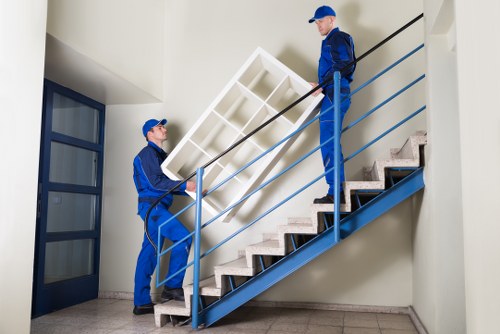
In Kensington, where properties can vary from period townhouses to commercial suites and modern mixed-use premises, it is useful to have movers who can adapt to stairs, lifts, narrow corridors, shared entrances, and tight arrival slots. That flexibility makes the relocation more manageable and helps avoid disruption for staff, visitors, and neighbouring occupiers.
Types of commercial moves we commonly help with
Commercial Moves in Kensington can cover a wide range of business types. The needs of each sector are different, so the moving plan should reflect the way the premises are used and the items being relocated. Below are some of the common move types local customers ask about.
- Office removals for small, medium, and larger teams
- Retail relocations including stock, shelving, displays, and fixtures
- Practice moves for professional, wellness, and client-facing environments
- Hospitality moves for cafes, bars, and restaurant support spaces
- Studio and creative workspace moves with equipment, materials, and storage
- Internal business moves within the same building or across nearby units
- Archive and records relocation requiring organised labelling and secure handling
Some companies only need transport and lifting help. Others need a more involved service that includes disassembly, careful packing, and sequencing the move around staff availability. If you are planning a business relocation in Kensington, it is worth asking for a service that reflects your actual working needs rather than relying on a generic package.
For many local customers, the best outcome is a move that feels orderly and calm, even if there are several moving parts behind the scenes. That is why careful preparation and good communication are so important throughout the process.
How the moving process typically works
A practical approach from first enquiry to move-in
Business customers often want to know how a commercial relocation will unfold. The process usually begins with a discussion of the premises, the items to be moved, the timing required, and any particular access challenges. This is especially useful in Kensington, where buildings may have limited loading options, controlled entry systems, or restrictions set by landlords and managing agents.
After the initial discussion, a move plan is usually developed around your priorities. This may include packing stages, labelling systems, vehicle access, and the order in which items should be loaded and unloaded. For example, a business may want IT equipment and essential documents positioned for immediate use first, while archive boxes, seasonal stock, or surplus furniture can be handled later in the sequence.
On the moving day itself, the focus is on efficiency and care. A well-run team will work methodically, keep items grouped logically, and make sure the right pieces arrive in the right rooms. Clear labelling and sensible staging are especially valuable for businesses with multiple departments or a mix of shared and private workspaces.
Preparation checklist for a smooth commercial move
Preparation is one of the biggest factors in making business relocations run smoothly. Even if you are using an experienced local team, some advance organisation will save time and reduce confusion. The following checklist is a sensible starting point for companies planning office removals or other commercial moves in Kensington.
- Confirm the moving date and ideal access times with building management if needed.
- Identify essential items that should be unpacked first in the new premises.
- Label desks, boxes, monitors, filing, and specialist equipment clearly.
- Back up digital files and ensure sensitive data is handled securely.
- Notify staff of responsibilities, timings, and any temporary workflow changes.
- Separate items to keep, relocate, store, recycle, or dispose of before moving day.
- Measure entrances, stairways, lifts, and key furniture items where access may be tight.
- Set aside parking or loading information if your building requires permits or appointments.
It is also worth walking through the new premises before the move, if possible, to decide where major items will go. This can prevent unnecessary shuffling later and helps the team place everything in the right area from the start. In commercial settings, that can make the difference between a smooth restart and a day spent moving things around after the van has gone.
For businesses in and around Kensington, this kind of practical planning can be especially important because space is often at a premium. Whether you are fitting into a compact office suite or a larger multi-room property, an organised plan helps the move feel much more controlled.
Handling access, parking, and building constraints in Kensington
Local challenges that can affect moving day

Kensington has many advantages as a business location, but it also brings specific moving challenges. Parking can be difficult near busy commercial and residential streets. Some buildings have time-limited loading areas, narrow entrances, or rules around service access. Period properties may have staircases, split levels, or internal layouts that are less straightforward than a modern office block. All of these factors can affect how a relocation should be arranged.
That is why local commercial movers are often asked to assess more than just the number of boxes. They also need to think about vehicle size, lifting routes, distance from the road, and the best order for loading and unloading. In some cases, the move may need to be split into several shorter phases so the business can stay operational or so building access rules can be followed properly.
Areas around Kensington often include a mix of residential streets, hotels, boutiques, clinics, embassies, and professional offices, which means movers need to work considerately and keep disruption low. A practical team will take care to protect floors, walls, door frames, and communal spaces while keeping the move on schedule. Careful planning is not just helpful here; it is essential.
Why choose a local company for commercial moves in Kensington
There are several strong reasons to use a local moving company for business relocations in Kensington. Local knowledge helps with route planning, loading arrangements, and understanding the rhythm of the area. That can be especially valuable if your business needs to move early in the morning, after hours, or over a weekend to minimise disruption.
Another benefit is responsiveness. If your plan changes, if there is a building issue, or if a piece of equipment needs extra care on the day, a local team is often better placed to adapt quickly. That kind of flexibility is useful for busy owners, office managers, and facilities teams who have enough to handle without worrying about the logistics of every item being moved.
There is also the matter of practical familiarity with local property types. Kensington includes stylish period buildings, managed office suites, modern commercial spaces, and mixed-use premises. Each one comes with different access routes, communal areas, and handling considerations. A team that regularly works in the area is more likely to anticipate those details before they become a problem.
Commercial move benefits for different customers
Business relocation services are not only for large corporations. In Kensington, many customers are smaller businesses that still need a professional standard of care. A local move can support a wide range of customers, including sole traders, growing firms, hospitality operators, independent retailers, and organisations with multiple staff members.
- Small offices benefit from an efficient move that keeps admin and downtime under control.
- Retail businesses benefit from structured handling of stock, displays, and fixtures.
- Professional practices benefit from organised packing and careful attention to confidential materials.
- Hospitality and leisure businesses benefit from coordinated lifting for equipment and back-of-house items.
- Growing companies benefit from a plan that supports expansion without causing workflow disruption.
Whatever the size of your operation, the main objective is the same: move efficiently, protect your assets, and get the business set up again as quickly as possible. A well-executed relocation can support that outcome by keeping the process structured and manageable.
Request a free quote when you are ready to compare your options and understand what your relocation may involve. A clear conversation early on can make the rest of the move much easier to organise.
What affects the cost of a commercial move
Understanding the main pricing factors
Many customers want to know what affects the cost of a business move before they commit to a booking. While exact prices depend on the details of each job, several common factors usually shape the overall quote. Knowing these helps you plan more effectively and compare services on a like-for-like basis.
The main variables often include the volume of items, the type of furniture or equipment, the distance between premises, the level of packing support required, the number of movers needed, and the accessibility of both locations. In Kensington, access can be a major factor because a premises with easy vehicle loading will usually be simpler to handle than one with stairs, limited parking, or a long carry distance.
Timing can also matter. Moves that need to be completed outside standard hours, across multiple phases, or in a very short window may require more coordination. If you have specialist items such as delicate instruments, heavy storage units, large screens, or sensitive records, those may require additional care or specific handling methods.
Questions to ask before booking
Before you confirm a commercial removals service, it helps to ask a few practical questions. This will give you a better idea of how the team works and whether they are suited to your premises and schedule. The goal is not to make the process complicated; it is to make sure there are no avoidable surprises on moving day.
- How do you handle buildings with restricted access or limited parking?
- Can you support moves outside standard business hours if needed?
- Do you help with dismantling and reassembly of office furniture?
- How should IT equipment and sensitive documents be prepared?
- What information do you need from us before the move date?
- Can the move be staged if we need to keep part of the business running?
These questions are especially useful for Kensington businesses because so many properties in the area have their own constraints. A service that answers clearly and plans properly is usually a better fit than one that takes a casual approach.
Areas covered around Kensington
Local and nearby locations we can often help with
Commercial relocation support in Kensington often extends naturally into the nearby parts of west and central London. Many businesses operate across interconnected districts, so moves are not always limited to one neighbourhood. Depending on the job, companies often need help moving between Kensington and nearby locations such as South Kensington, Notting Hill, Holland Park, Chelsea, Earls Court, Bayswater, and West Brompton.
This broader local coverage is useful when a business is relocating to a nearby office, changing retail space within a short distance, or moving staff and equipment between branches. Keeping the move local can reduce transit time and make it easier to coordinate access, building rules, and the timing of lift or loading use.
For commercial customers, that local reach often means less time spent managing the move across different parts of the day and more time focusing on reopening, resuming appointments, or welcoming staff back to work. If your premises are part of a wider business district, local movers can also be helpful when liaising around busy streets and shared spaces.
What makes a move more efficient on the day
Practical tips that help the relocation run well
There are a few simple things that can make any business relocation more efficient. The first is a clear point of contact, so decisions can be made quickly if anything changes. The second is strong labelling, which helps movers place items in the right area without repeated instructions. The third is a sensible sequence for what should be loaded first and unloaded first.
It is also helpful to keep walkways clear, separate essential items from non-essential ones, and make sure staff know what is expected of them. In a busy commercial move, confusion can waste time. By contrast, a well-prepared environment allows the movers to work steadily and reduce disruption. Even small steps, like grouping cables, securing drawers, and marking fragile equipment, can make a meaningful difference.
In Kensington, where some business premises may have more limited internal space, keeping the site tidy during the move is especially valuable. A calm and organised setup allows the relocation team to move efficiently and helps protect the building and its shared areas.
When a phased move may be the better choice
Not every commercial relocation needs to happen all at once. In some cases, a phased move is the smarter solution. This can be especially helpful for businesses that must remain operational while moving, or for companies occupying larger premises where departments can be shifted one at a time.
Phased business removals can also work well when you need to coordinate around fit-out schedules, IT installation, or landlord requirements. By splitting the process into stages, you can reduce pressure on staff, keep essential services running, and avoid overcrowding the new premises before they are ready.
Book your service now if you are looking for a move plan that can be tailored to your working pattern. A phased approach is not always necessary, but when it is, it can make a major difference to how manageable the relocation feels.
FAQs about commercial moves in Kensington
Common questions from local business customers
Below are some of the questions people often ask when arranging commercial removals in Kensington. These answers are designed to help you plan with confidence and understand what to expect from the process.
How far in advance should I book a commercial move?
The earlier you can start the conversation, the better. This gives time to plan around access, staff availability, and any building restrictions. If your move is time-sensitive, it is especially sensible to enquire early so the schedule can be shaped around your needs.
Can a business move be done outside normal working hours?
Often, yes. Many commercial customers prefer early morning, evening, or weekend timing to reduce disruption. The best option depends on your premises, access arrangements, and the scope of the move.
Do I need to pack everything myself?
Not necessarily. Some businesses choose to pack their own documents, office equipment, and personal items, while others prefer support with packing and boxing. The right approach depends on the volume of items, how sensitive they are, and how much internal time you have available.
What about fragile or specialist items?
Fragile items, specialist equipment, and sensitive materials should be discussed in advance so the moving plan can account for them. This may include extra wrapping, secure placement, careful sequencing, or additional handling measures.
Can you help if my building has difficult access?
Yes, access challenges are common in Kensington and are usually part of the planning stage. Narrow streets, stairs, restricted loading, and shared entrances can all be managed more effectively when they are identified early.
Will my move be suitable if I only need a small office relocation?
Absolutely. Smaller office removals still benefit from a professional approach, especially if they involve IT equipment, filing systems, or furniture that needs to be dismantled and reassembled. Smaller moves can also be more time-sensitive because businesses often want to resume work quickly.
Choosing the right support for your relocation
When you are arranging a business move, the right support can make the whole experience feel much more manageable. For companies looking at Commercial Moves in Kensington, the most useful service is one that understands the practical demands of the area, works carefully around access limitations, and keeps the relocation process simple to follow.
A good commercial removals team should be able to listen to your requirements, assess the premises realistically, and suggest a move structure that fits your timetable. That might mean handling everything in one go, or it might mean planning a staged process that allows your business to keep operating. Either way, the service should feel tailored to your workspace, not forced into a standard template.
If you are comparing options, focus on the practical questions: how the move will be planned, how items will be protected, how access will be managed, and how quickly your business can get back to work. Those details matter more than any general promise, especially in an area as varied and active as Kensington.
Contact us today to discuss your relocation needs, ask about availability, and request a free quote for your Kensington business move. Whether you are relocating a small office, a retail unit, or a larger commercial space, the right planning can help your move feel organised from start to finish.