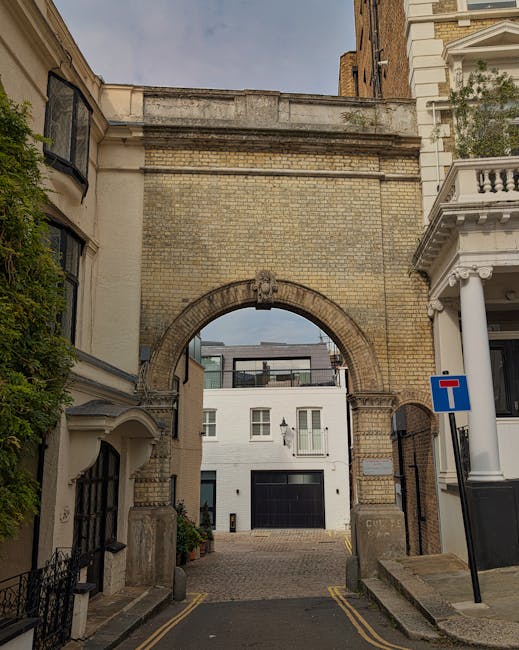
Difficult access removals for Earls Court narrow streets: a practical guide to moving well in tight spaces
If you are planning Difficult access removals for Earls Court narrow streets, you already know the challenge is not just the packing. It is the stairs, the width of the road, the parked cars, the awkward doorway, and the moment a sofa looks too large for the route it has to take. Earls Court can feel straightforward on a map, then suddenly very different once you are standing on the pavement with a trolley and a limited loading space. Truth be told, that is where careful planning saves the day.
This guide breaks the process down in plain English. You will learn what makes a move "difficult access", how the work is usually handled, what to expect on the day, and where people most often go wrong. It also covers practical checklists, compliance considerations, and the small details that make a big difference in narrow London streets. If you need broader support for the move itself, it may also help to look at removal services, flat removals, or a flexible man with van option where the route, access, and vehicle size can be matched more precisely to the job.
Table of Contents
- Why difficult access removals in Earls Court narrow streets matter
- How difficult access removals work
- Key benefits and practical advantages
- Who this is for and when it makes sense
- Step-by-step guidance
- Expert tips for better results
- Common mistakes to avoid
- Tools, resources and recommendations
- Law, compliance, standards and best practice
- Options, methods, or comparison table
- Case study or real-world example
- Practical checklist
- Conclusion
- Frequently asked questions
Why difficult access removals in Earls Court narrow streets matter
Earls Court's streets and mews-style side roads can make a normal move feel more like a logistics exercise. In narrow streets, the moving van may not be able to park directly outside, neighbours may already have cars lining both sides, and the entrance to the building can be tucked behind railings, stairwells, or a small front courtyard. A move that looks simple on paper can become time-consuming if nobody has planned for the access properly.
That matters for three reasons. First, time. A few extra minutes carrying each item becomes a long, tiring delay when you are moving an entire flat. Second, safety. Tight turns, steep steps, and uneven pavement increase the chance of damage or injury. Third, cost control. Poor access often leads to more labour, longer vehicle waiting time, or a second trip. Nobody wants that surprise. Not on moving day, anyway.
There is also the emotional side. Moving is already one of those days where you feel slightly over-caffeinated and slightly under-prepared. If the street layout, parking, or building access adds friction, stress rises quickly. That is why experienced movers treat difficult access as a planning issue, not just a transport issue. A good plan turns the problem into a process.
If the move involves heavy furniture, awkward hallways, or stair-only access, the route into the building can be just as important as the journey across London. For larger household moves, some people also pair this kind of planning with house removals or home moves support so the move is paced sensibly from start to finish.
Expert takeaway: In narrow Earls Court streets, the best move is usually the one that is planned around access first and packing second. If you get the access right, the rest tends to behave itself.
How difficult access removals work
A difficult access removal is basically a move where the route in or out is the challenge. That could mean a narrow road, a limited parking bay, a steep stairwell, a basement flat, a top-floor apartment without a lift, or a building with time-restricted access. In Earls Court, it is often a combination of these things rather than just one issue.
The process usually starts with an access assessment. This does not need to be dramatic. A good mover will ask practical questions: How wide is the entrance? Are there steps? Is there a lift? Can a van stop close by? Is there a loading bay nearby? Are there height restrictions, low trees, or sharp turns? These details help determine whether a smaller vehicle, extra crew, or staggered loading is the better choice.
From there, the move is planned in sections. Packing, vehicle choice, route planning, and lifting strategy all need to line up. For example, a smaller removal vehicle may be better than a large truck if the road is tight and parking is scarce. In some cases, a removal van is the more sensible choice than trying to force a bigger vehicle into a street that simply was not built for it.
On the day, the team may use protective equipment, trolleys, straps, blankets, and extra hands to move items efficiently without scraping walls or blocking the road for too long. If access is very restricted, they may do a shuttle system: park where possible, then transfer items in smaller loads. It is a bit old-school, but it works. Sometimes boring logistics are the hero of the story.
For office moves, the logic is the same, although the details change. Desk legs, filing cabinets, and IT kit all behave differently from a sofa or wardrobe. In those cases, office removals or commercial moves can be a better fit because the approach accounts for business access, timings, and continuity.
Key benefits and practical advantages
When access is tight, the right removals plan does more than get things from A to B. It reduces friction across the whole move. Here are the main advantages people notice.
- Less physical strain: fewer repeated lifts, shorter carrying distances, and smarter handling of heavy pieces.
- Lower risk of damage: careful routing helps protect door frames, banisters, and awkward corners that often get knocked in narrow properties.
- Better time control: when the vehicle size and parking plan are right, the move stays on schedule more easily.
- More predictable costs: access planning helps avoid delays, failed parking attempts, or unnecessary extra labour.
- Less disruption to neighbours: a tidy loading plan keeps pavements and entrances clearer for everyone else.
- Improved confidence on moving day: once the access plan is set, the day feels much less chaotic.
There is a practical human benefit too: you tend to make better decisions when you are not rushing. If you know the van cannot sit directly outside your building, you can pack lighter boxes, label furniture by priority, and separate the items you will need first. That sounds basic, but it changes the whole experience.
For people who only need a smaller, efficient move, the flexibility of man and van or man with a van arrangements can be especially useful. They often fit awkward access jobs better than a larger, one-size-fits-all service. Not always, but often enough that it is worth considering.
Who this is for and when it makes sense
This kind of service is not just for huge removals. In fact, it is often the smaller, tighter jobs where access planning matters most. If you live in a top-floor flat, a converted townhouse, a mansion block with narrow stairs, or a building with restricted parking, you are already in the difficult-access category whether you like it or not.
It also makes sense if you are moving:
- from a basement or garden flat with limited rear access
- from a property with a narrow hallway or tight front door
- from a street with heavy parking pressure and no direct loading space
- with fragile items, such as mirrors, artwork, or upright instruments
- with bulky furniture that needs measuring in advance
- at short notice, where planning time is limited
Students moving into or out of small Earls Court flats often underestimate access issues. Then suddenly the wardrobe does not fit through the stair bend and the whole afternoon disappears. A smaller vehicle, lighter packing, and a few extra checks can make life much easier. For that sort of move, student removals can be a practical fit.
Likewise, if you are downsizing, clearing a room, or moving just a handful of pieces, access-friendly support may be more efficient than booking a full-scale removal. If you have old furniture to clear at the same time, furniture removals or even furniture pick up can help keep the job tidy and focused.
Step-by-step guidance
Here is the part that helps most people get through the day without the usual moving-day wobble. Keep it simple, and keep it realistic.
- Measure the access points. Check the door width, stair turns, lift size, and any tight corners. Do not guess. A tape measure and a few photos can save a lot of guesswork.
- Photograph the route. Take clear images of the entrance, the pavement, the staircase, the parking situation, and any obstacles. This helps whoever is moving you understand the actual conditions, not the idealised version.
- List the bulky items first. Sofas, beds, wardrobes, desks, pianos, and large appliances should be identified early. These are usually the items that decide the rest of the plan.
- Choose a vehicle that suits the street. In a narrow Earls Court road, a smaller van may be more efficient than a large truck. If your move is substantial, a removal truck hire option can still work, but only if the access and parking allow it.
- Work out the loading window. If local parking is tight, decide when the van should arrive and how long it can realistically stay.
- Pack for carrying, not just storage. Use smaller boxes, avoid overfilling them, and make sure each one can be carried safely up and down stairs.
- Protect the route and the items. Blankets, wrap, floor protection, and corner guards are useful in narrow properties where one scrape can leave a mark.
- Keep priority items separate. Essentials, documents, chargers, kettle, and first-night basics should not disappear into the back of the van.
- Confirm the plan the day before. Recheck timings, access instructions, and contact details. A final quick call or message is worth it.
If any part of the move is unusually complex, it can help to book professionals who already work in tight city access. That is especially true for stair-only flats, valuable items, or busy weekday moves. A calm crew makes a calm move. Simple as that.
Expert tips for better results
Over the years, one thing becomes clear: most difficult-access problems are made easier by small decisions, not big dramatic fixes. A few practical habits do a lot of heavy lifting.
Use smaller boxes than you think you need. It sounds obvious, but in narrow stairwells, a heavy box becomes awkward quickly. Smaller boxes are easier to turn, lift, and pass safely around corners.
Measure the awkward items first. If a sofa barely clears the hallway in your head, measure it. Twice. Furniture often looks more cooperative on a sunny Saturday morning than it does at the bottom of the stairs.
Keep the walkway clear. Shoes, bins, plant pots, and loose cables all seem harmless until they become trip hazards. Move them early.
Plan for the return journey. People often focus on getting items out, then forget how the empty boxes, packing materials, and unused fixtures will leave the property. If you want less mess at the end, set aside a clearing zone.
Allow a margin for the unknown. Narrow streets rarely behave perfectly. A delivery lorry may stop nearby. A neighbour may be loading their car. A lift may be slower than expected. Build a little buffer into the day so these things do not throw everything off.
Consider split loads. For some Earls Court properties, moving in two lighter trips is cleaner than trying to force one giant load through the street at rush hour.
One small, slightly old-fashioned but useful tip: keep a roll of tape, marker, and a cloth in a pocket or top box. You will use them. Everyone says they won't, and then everyone does.
Common mistakes to avoid
A lot of moving stress comes from assumptions. Narrow streets punish assumptions quickly. Here are the most common ones.
- Assuming a large van will fit. It might, but "might" is not a plan.
- Not checking lift dimensions. A lift that looks spacious can still be too short or too narrow for furniture to turn inside.
- Packing boxes too heavily. That makes stairs, corners, and long carries much harder.
- Ignoring parking pressure. Even if you can stop outside for a minute, a minute can pass faster than you expect.
- Leaving access questions until moving day. By then, the useful options are much thinner.
- Forgetting building rules. Some blocks have set moving times, booking systems, or service entrance rules.
- Not separating fragile or high-value items. In a tight move, those pieces deserve their own attention.
A more subtle mistake is thinking access problems can be solved by brute force. Usually they cannot. Better planning beats extra effort. Every time, almost.
Tools, resources and recommendations
You do not need complicated equipment to manage a narrow-street move well. You need the right basic tools and a sensible plan. The following are the most useful in real life:
- tape measure for doors, stairs, and furniture
- phone camera for access photos
- labels or marker pens for clear box identification
- sturdy gloves for grip and protection
- blankets and wrap for furniture corners
- ratchet straps or load restraints where suitable
- small trolley or sack truck if the route allows it
- floor covering for hallways and entrances
For packing support, packing and boxes can help if you want a neat, organised system rather than a last-minute scramble. If the move is more complicated, packing and unpacking services can take a lot of pressure off, especially when the schedule is tight.
If you need to hold items temporarily because access at the new place is not ready, or the moving times do not line up neatly, storage may be a sensible short-term option. That is particularly helpful during refurbishments, between tenancies, or when the final destination is still being sorted out.
When you are comparing options, it is sensible to review pricing and quotes carefully and check what is included. Access complexity can change the amount of labour required, so clarity matters. The cheapest-looking quote is not always the clearest one. And clarity, honestly, is what saves people headaches.
Law, compliance, standards and best practice
For removals in London, compliance usually means a practical mix of safety, insurance, responsible parking, and respect for the building or street you are working in. You do not need to know every technical detail, but you do need to understand the basics.
Good practice typically includes:
- Working safely: lifting sensibly, using proper handling methods, and avoiding unnecessary strain.
- Using suitable vehicles: not just the biggest available van, but the one that actually fits the access.
- Being insured: so that goods and handling risks are covered to the extent agreed.
- Respecting the property: protecting floors, walls, doors, and common areas where appropriate.
- Following building rules: such as moving hours, lift reservations, or access codes.
- Keeping communication clear: so everyone knows where the van is, when it is arriving, and how the loading will work.
If you want reassurance on safety and handling standards, it is worth reading the company's health and safety policy and insurance and safety information. Those pages help explain what a professional approach should look like in everyday terms.
For customers, the key point is simple: ask how the move will be managed, not just how much it costs. A trustworthy provider should be able to explain access planning, item protection, and what happens if conditions on the day are tighter than expected. If the move involves documents, payment handling, or service terms, it is also sensible to read the relevant terms and conditions and payment and security information.
Options, methods, or comparison table
Different access problems call for different approaches. Here is a straightforward comparison to help you decide what fits best.
| Approach | Best for | Strengths | Trade-offs |
|---|---|---|---|
| Small van move | Narrow streets, short-notice or lighter loads | Better street fit, easier parking, quicker loading | May require more trips for larger moves |
| Full removal vehicle | Larger household or office moves where access is manageable | Efficient for bulkier loads, fewer journeys | Harder to use in tight roads or restricted bays |
| Shuttle-style move | Very restricted streets or difficult building access | Flexible, safer in awkward conditions | Can take longer and needs strong coordination |
| Storage-first move | Moves with timing gaps or uncertain access at the destination | Reduces pressure, allows phased moving | Needs extra planning and a temporary storage step |
For many Earls Court moves, the sweet spot is a smaller vehicle with a careful loading plan. For others, especially larger home or business relocations, a more structured service is worth it. If the job has multiple rooms, bulky furniture, or office equipment, you may prefer a wider move package such as removals, office relocation services, or office removals.
Case study or real-world example
Picture a second-floor flat in Earls Court with a narrow staircase, no lift, and a street where parking is already crowded by mid-morning. The client has a sofa, a bed frame, a desk, four book boxes, and a couple of fragile lamps. Nothing outrageous, just the kind of move that seems simple until you meet the stairs.
Instead of sending a large vehicle and hoping for the best, the move is planned around access. The furniture is measured the day before. The larger items are wrapped in advance. Boxes are kept light enough to carry comfortably. The arrival time is set early, before the street gets busier. The van parks where it can, the team uses a short carry distance, and the loading is done in an orderly sequence rather than a rush.
The result? Less stress, less wall damage risk, and a move that feels controlled rather than frantic. The sofa still needed a careful pivot around the stair turn. Of course it did. But because the team expected that, it became a normal part of the day instead of a drama.
This is the real value of access-led planning: the move still has moving-day energy, but not the panicky kind. It feels managed. And that makes a difference to everybody involved.
Practical checklist
Use this checklist a day or two before the move. It is deliberately simple, because complicated checklists tend to get ignored.
- Measure doors, stairs, lifts, and furniture dimensions
- Take photos of the street, entrance, and any parking restrictions
- Confirm whether a smaller vehicle is the better fit
- Tell the movers about heavy, fragile, or awkward items
- Check building access times and any rules for moving
- Pack boxes so they can be carried safely up or down stairs
- Keep essentials separate for easy access on arrival
- Protect floors, corners, and vulnerable furniture
- Allow extra time for parking and loading
- Reconfirm the plan the day before
Quick reminder: if something feels uncertain, say so early. It is always easier to solve access issues before the van arrives than after everyone is standing in the street wondering which side of the building the entrance is on.
Conclusion
Difficult access removals in Earls Court narrow streets are all about planning with the real environment in mind. Narrow roads, tight stairwells, parking pressure, and bulky furniture can all be managed well if the move is approached carefully and honestly. The best outcomes usually come from accurate measurements, a suitable vehicle, clear communication, and a calm, flexible attitude on the day.
If you remember one thing, let it be this: access is not a side issue. It is the move. Once you treat it that way, everything gets easier to organise and much less stressful to live through.
If you are comparing options for a tricky local move, review the relevant service pages, think through the access details, and choose the approach that fits your street rather than forcing the street to fit the move.
Get a free quote today and see how much you can save.
Frequently Asked Questions
What counts as a difficult access removal in Earls Court?
It usually means any move where parking, entry, stairs, lifts, or street width make the job more complicated than a standard doorstep load. In Earls Court, that often includes narrow roads, top-floor flats, and buildings with tight entrances.
Do narrow streets always mean I need a smaller van?
Not always, but very often a smaller vehicle is easier to position and quicker to load. The right choice depends on the road layout, parking pressure, item size, and whether the van needs to wait close by or shuttle items in stages.
How do I measure whether my furniture will fit through the door or stairs?
Measure the widest and tallest parts of each item, then compare them with the narrowest door frames, stair turns, and corridor widths. Remember to account for angles, not just straight lines. A sofa can fit in principle and still be a nightmare in practice.
Should I tell the removals team about access problems in advance?
Yes, absolutely. The earlier they know, the better they can plan the vehicle size, number of movers, timing, and handling method. Last-minute surprises are where most stress comes from.
Can difficult access removals take longer than a normal move?
Yes. Longer carry distances, stairs, parking delays, and careful manoeuvring usually add time. That does not mean the move is unmanageable, just that it needs a realistic schedule.
What if the van cannot park directly outside my building?
The team may use a nearby legal stopping point and carry items a short distance, or they may use a shuttle approach with smaller loads. The best method depends on how busy the street is and how much furniture needs moving.
Is packing differently important for difficult access moves?
Very. Smaller, lighter boxes are easier to carry on stairs and through narrow hallways. It is also wise to label fragile items clearly and keep essential items separate so they are easy to reach.
What type of move is better for a flat with no lift?
Smaller, more organised removals are usually best, especially if the flat is high up and the stairwell is tight. Services such as flat removals are often a natural fit because they are built around that kind of access.
Can I combine furniture clearance with a difficult access removal?
Yes, as long as it is planned properly. If you want old items taken away as part of the move, furniture removals or furniture pick up can help keep the process simple and uncluttered.
What should I check before confirming a quote?
Check what the quote includes, whether access is fully factored in, how many movers are expected, and whether parking or waiting time could affect the cost. If in doubt, ask for the access assumptions in plain English. That saves confusion later.
Are difficult access removals suitable for short-notice moves?
They can be, especially if the move is small and flexible. A same-day or urgent booking may still work, but the more complicated the access, the more valuable it is to provide clear information from the start. In some cases, same day removals are possible if the move is straightforward enough for the access conditions.
What is the safest way to move heavy items down narrow stairs?
Use the right number of people, keep the item close to the body, take turns slowly, and protect the route. If the item is awkward or very heavy, do not force it. A careful pause is better than a damaged wall or a strained back.
Where can I read more about how the company handles safety and trust?
It is sensible to review the company's about us, insurance and safety, and health and safety policy information. Those pages help set expectations for how the move should be managed.
One last thing: if your Earls Court street feels awkward now, that does not mean the move has to be. With a bit of planning, even the tightest route can be handled smoothly enough, and sometimes that is all you need to breathe out and get on with the day.